
Dental Implant Myths Debunked: What Calgary Patients Should Know
Dental implants can replace missing teeth, but common myths can make the decision confusing. They are not only for older adults, treatment is not always completed in a day, and an implant still needs ongoing cleaning and professional care. Whether implants are appropriate for you depends on your oral health, medical history, available bone and treatment goals.
If you have lost a tooth, you may have heard conflicting opinions about pain, recovery, cost or how long an implant should last. A friend's experience can be helpful to hear, but it cannot establish what treatment your mouth needs.
At Alpha Dental Care, we help Calgary patients understand their tooth replacement options and the reasons behind a recommendation. Here are ten misconceptions worth discussing before you decide how to replace a missing tooth.
First, What Is a Dental Implant?
A dental implant acts as an artificial tooth root. It is placed in the jawbone and supports a replacement tooth or another restoration.
For one missing tooth, the treatment commonly involves the implant itself, a connecting component called an abutment and a crown. Other designs can support several replacement teeth.
The Canadian Dental Association's information about dental implants explains the basic process and the assessment involved. Understanding the components is useful because patients often use the word "implant" to mean the entire finished tooth, even though treatment includes several parts.
When comparing recommendations or estimates, ask what is included. That simple question helps make the rest of the discussion clearer.
Myth 1: Dental Implants Are Only for Older Adults
Missing teeth can affect adults at different stages of life. Age alone does not determine whether an implant is appropriate.
The American Dental Association's patient information about implants explains that health is generally a more important consideration than age. Younger patients also need assessment of jaw growth before treatment is considered.
For an older adult, the conversation may include medical conditions, medications and the ability to maintain daily oral care. For a younger adult, the discussion may focus on development, the reason for tooth loss and the long-term treatment plan.
You do not need to rule yourself in or out based on a birthday. Ask your dentist which factors matter in your circumstances and whether any further assessment is needed before making a recommendation.
Myth 2: Implant Treatment Must Be Extremely Painful
Implant placement is a surgical procedure, but pain during treatment and discomfort during recovery are different issues. Local anaesthetic is commonly used to numb the treatment area. Your clinician should explain the proposed approach to comfort and what you might experience afterwards.
The Guy's and St Thomas' NHS guide to having a dental implant describes the use of local anaesthetic during placement. Its aftercare information notes that postoperative pain varies between people.
Avoid treating either "it was painless" or "it was terrible" as a prediction of your own experience. Ask about the procedure you need, the recovery instructions and whom to contact if symptoms are worsening.
If dental anxiety is a concern, say so early. Alpha Dental Care can discuss sedation dentistry options where appropriate. The choice requires an individual assessment and should not be assumed from someone else's treatment.
Myth 3: Every Implant Can Be Finished in One Appointment
Some treatment plans allow an implant and a temporary replacement tooth to be placed at the same visit. That does not mean every patient is suitable for this approach or that healing is complete that day.
Bone healing and the final restoration can involve additional time. The ADA describes implant treatment as a process that may include placement, healing and fitting the replacement tooth, with timing depending on the case.
Ask what a proposed timeline means. Does it describe implant placement, a temporary tooth, the final restoration or the completion of follow-up care? Those are different milestones.
Our step-by-step dental implant procedure guide provides further context. Your own written plan should explain the sequence and any factors that could change it.
An upcoming event or travel date is worth mentioning, but it should not become a reason to rush a healing stage.
Myth 4: Bone Loss Means an Implant Is Impossible
Enough suitable bone is needed to support an implant, but bone loss does not automatically settle the question. Some patients may be candidates for additional procedures; others may be better served by another replacement option.
The Canadian Academy of Periodontology's implant overview explains that regenerative treatment may sometimes make implant placement possible after bone loss.
If bone grafting is discussed, ask why it is being recommended, what it adds to the treatment and what alternatives exist. You should understand whether the plan is confirmed or whether further imaging or specialist advice is needed.
Do not assume that grafting is required simply because a tooth has been missing for years. Equally, do not assume it can always be avoided because the tooth was removed recently. The assessment needs to address the actual site.
Myth 5: Implants Are Only for Replacing a Full Set of Teeth
Implant treatment can address different patterns of tooth loss. It may involve one missing tooth, several teeth or support for a larger restoration.
The American Academy of Periodontology's guide to implant procedures describes single-tooth, multiple-tooth and full-mouth approaches.
The design matters. A crown, an implant-supported bridge and an implant-supported denture are not interchangeable terms. They can differ in how they are supported and how you care for them.
Ask your dentist to show you the proposed restoration and explain whether it will be fixed or removable. If several teeth are missing, ask how many implants are proposed and why. A clear explanation is more useful than assuming every missing tooth always requires its own implant.
Our dental implants service in Calgary is a starting point for discussing your particular needs.
Myth 6: Implants Do Not Need Cleaning Because They Cannot Get Cavities
An artificial tooth does not develop tooth decay in the same way as a natural tooth, but the surrounding tissues still need care. Plaque-related inflammation can affect the gums and supporting bone around an implant.
The American Academy of Periodontology's information about peri-implant diseases explains these concerns and identifies signs such as red or tender gums and bleeding when brushing.
Ask to be shown how to clean around your specific restoration. A single implant crown and a larger implant-supported restoration may require different tools or techniques.
If an area is awkward to reach, explain the difficulty rather than skipping it. Your dental team can review the routine with you. Keep attending dental examinations and hygiene appointments at the interval recommended for your needs.
Cleaning and follow-up remain part of the commitment after the final tooth is fitted.
Myth 7: A Dental Implant Is Guaranteed to Last Forever
Implants can provide long-term tooth replacement, but they should not be presented as a lifetime guarantee. The implant and the restoration attached to it are separate components, and future problems can involve either one.
The U.S. Food and Drug Administration's patient guidance on dental implants explains that complications can arise shortly after placement or much later. It also emphasizes ongoing cleaning and dental visits.
When you hear a lifespan claim, ask what it refers to. Is the discussion about the implant remaining in place, the crown avoiding replacement or the absence of any maintenance? Those are different outcomes.
Before treatment, ask what follow-up is recommended and what future repairs might involve. A realistic long-term plan is more helpful than a promise that nothing will ever need attention.
Myth 8: Smoking or Medical Conditions Do Not Affect the Decision
Your medical history is an essential part of implant planning. Smoking can affect healing and long-term outcomes, and some health conditions can increase the risk of complications.
The FDA highlights smoking and conditions such as uncontrolled diabetes among relevant considerations. This does not mean that every person with a medical condition is automatically unsuitable. It means the team needs accurate information to assess the risk and plan care.
Bring an up-to-date medication list and explain any changes in your health. Ask whether your dentist needs information from another healthcare professional before proceeding.
Do not stop prescribed medication or change medical treatment on your own to prepare for dental care. Any adjustments need to be coordinated by the relevant clinicians.
Being open about smoking and health concerns helps the team give advice that reflects your circumstances.
Myth 9: All Implant Prices Include the Same Treatment
Two estimates can look similar while describing different services. A headline price may refer to one component rather than the complete sequence of care.
Ask whether the proposed estimate includes assessment, imaging, placement, connecting components and the final restoration. Clarify any separate costs for extraction, grafting, temporary teeth or other procedures recommended in your case.
Also ask who will provide each part of the treatment and what follow-up is included. The aim is to understand the complete proposal before comparing numbers.
Our article about dental implant costs in Calgary explores the cost discussion in more detail. The estimate for your own treatment remains the relevant figure.
If you have dental benefits, obtain a plan-specific response about the proposed procedures. Our implant insurance article provides general context, but it cannot confirm your coverage or payment.
Myth 10: An Implant Is Automatically the Best Choice for Every Missing Tooth
Implants are one option, rather than a universal answer. Bridges, removable restorations and other approaches may also deserve consideration depending on the mouth and the patient's priorities.
For example, the condition of neighbouring teeth matters when comparing a single implant with a conventional bridge. The Canadian Dental Association's information about bridges explains how a tooth-supported bridge relies on adjacent teeth.
Ask which options are clinically reasonable for you, what each involves and why one is being recommended. The discussion should include the treatment burden, maintenance and costs as well as the intended result.
You should also understand whether a tooth can reasonably be retained before deciding to remove it. If the tooth is still present, ask about its prognosis and any appropriate tooth-preserving alternatives.
The purpose of a consultation is to compare suitable choices, not to assume an implant decision has already been made.
How to Prepare for a Dental Implant Consultation
Start with what you want help with. Perhaps chewing is uncomfortable, a gap affects your confidence or an existing restoration no longer meets your needs. Explain those concerns in your own words.
Bring relevant dental records if requested, your medication list and any questions about previous advice. If you have already received an estimate, ask what assumptions it makes and whether further assessment could change the plan.
Before agreeing to treatment, make sure you understand the recommendation, alternatives, risks, stages and expected responsibilities at home. Ask who to contact if questions arise between appointments.
You can take time to review a written plan. If a detail remains unclear, request an explanation that relates to your teeth rather than relying on general claims about implants.
Frequently Asked Questions About Dental Implants
Am I too old to have a dental implant?
Age alone does not answer the question. Your oral health, medical circumstances and ability to maintain care need assessment. Book a consultation rather than ruling yourself out based on age.
Can an implant replace just one tooth?
Yes, a single implant-supported crown may be an option for one missing tooth. Suitability depends on the site and the overall treatment plan.
Will I leave the first appointment with my final tooth?
Not necessarily. Consultation, placement, temporary restoration and final restoration are different stages. Ask what is planned at each appointment and what healing is required.
What if I have been told I need bone grafting?
Ask why it is recommended, what it adds to treatment and whether alternatives are appropriate. The need for grafting depends on the assessment of the proposed implant site.
What should I do if an existing implant becomes painful or loose?
Contact your dentist promptly. The FDA advises reporting implant pain or looseness right away. Do not assume it is a normal sign of ageing or something that can wait until a routine visit.
Get Clear Answers About Dental Implants at Alpha Dental Care
Good decisions start with accurate information and a plan that fits your needs. Questions about pain, healing, maintenance and cost are all reasonable topics for a consultation.
Alpha Dental Care welcomes patients who want to explore tooth replacement options in Calgary. We can assess your oral health, explain the choices and help you understand the next steps.
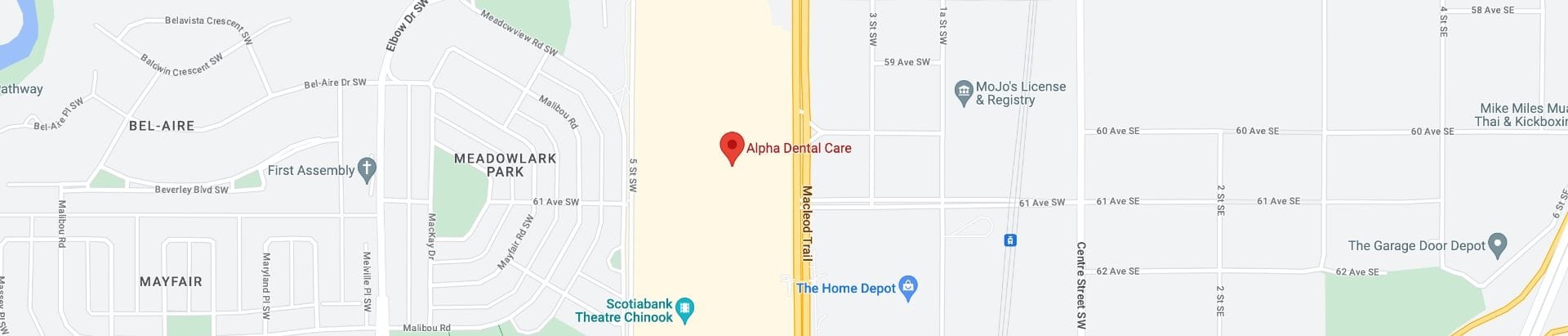
Contact Alpha Dental Care or call 403-252-7608 to arrange a consultation at our office in the Chinook Centre Professional Tower, 500, 6455 Macleod Trail SW, Calgary.